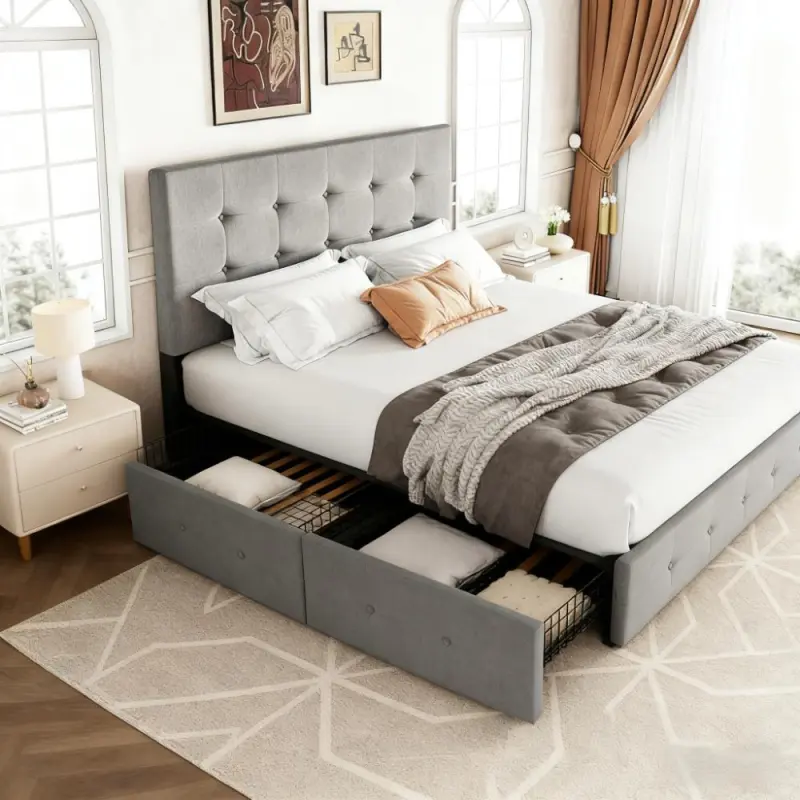
When it comes to modern storage beds—especially those with hydraulic lift mechanisms—the difference between a long-lasting investment and a frustrating disappointment often lies in three critical technical parameters: load capacity, noise control, and lock stability. Whether you're a homebuyer, interior designer, or furniture distributor sourcing for global markets, understanding these specs can save time, money, and future headaches.
A typical hydraulic lift bed should support at least 150 kg (330 lbs) per side when fully loaded with bedding, storage items, and frequent use. But what many overlook is the importance of consistent performance over time. Reputable manufacturers test their units against international standards like EN719 and ASTM F2057, which mandate a minimum of 100,000 open-close cycles without failure. This means your bed must function flawlessly after years of daily use—not just during the first few weeks.
For example, single-rod systems may seem cost-effective but tend to sag under uneven weight distribution. Dual-support hydraulic rods offer better balance and reduce wear on hinges and joints—a key factor for families with kids or elderly users who need reliable, smooth operation.
No one wants to wake up a sleeping child or partner every time they get out of bed at night. High-quality hydraulic lift beds incorporate silent damping technology that ensures a slow, controlled descent—typically less than 3 seconds from full lift to closed position. This isn’t just about comfort—it’s about preserving sleep quality, especially in small apartments or shared living spaces.
Look for models certified under ISO 14001 for low-noise manufacturing processes. These products often include rubberized internal dampers and precision-engineered pistons that minimize friction-related sounds—an essential feature for urban dwellers and hotel chains alike.
A bed that doesn’t stay put poses serious risks—especially in households with children or pets. The best hydraulic lift beds use dual-locking mechanisms: one mechanical (a steel latch) and one magnetic (for added security). Together, they ensure the platform remains stable even if the user applies sudden force while getting in or out.
Real-world testing shows that beds meeting EN719 standards have a 98% success rate in maintaining locked positions after 50,000 uses—far higher than non-certified alternatives that fail as early as 10,000 cycles.
If you’re considering OEM customization—whether for private labeling, unique dimensions, or eco-friendly finishes—you’ll want a partner who understands both product engineering and global logistics. With flexible shipping options and multilingual support, many manufacturers now cater to B2B buyers across North America, Europe, and the Middle East.
 35
|
35
|
 Storage bed design techniques
Small bedroom storage solutions
Practical functions of hydraulic lift beds
Modern minimalist furniture recommendations
Export - grade eco - friendly beds
47
|
silent storage bed rails
gentle push drawer test
drawer rail noise detection
storage bed buying guide
ball bearing rail technology
281
|
modular sofa assembly
high-density foam sofa
sofa durability
cloud comfort sofa
sofa fabric comparison
383
|
modular sofa compliance
EN71 standard
ASTM F400-09
furniture export certification
child safety in furniture
371
|
EN71 standard
children's furniture flame retardancy
ASTM F400-09
furniture export certification
EU ASTM sofa compliance
Storage bed design techniques
Small bedroom storage solutions
Practical functions of hydraulic lift beds
Modern minimalist furniture recommendations
Export - grade eco - friendly beds
47
|
silent storage bed rails
gentle push drawer test
drawer rail noise detection
storage bed buying guide
ball bearing rail technology
281
|
modular sofa assembly
high-density foam sofa
sofa durability
cloud comfort sofa
sofa fabric comparison
383
|
modular sofa compliance
EN71 standard
ASTM F400-09
furniture export certification
child safety in furniture
371
|
EN71 standard
children's furniture flame retardancy
ASTM F400-09
furniture export certification
EU ASTM sofa compliance