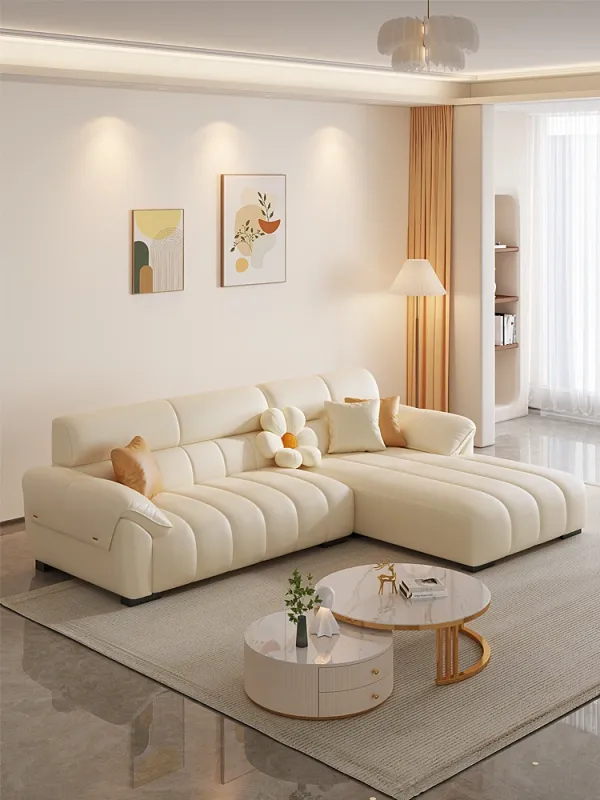
When your living room is also your dining corner, reading nook, guest bed, and “where-do-I-put-this-box” zone, every centimeter matters. A modular sofa isn’t just a trendy look—it’s a structural solution. If you choose the right layout and proportions, you’ll gain cleaner walkways, better sightlines, and seating that stays comfortable after long hours (not the “looks fluffy but collapses in two weeks” kind).
In small homes, the sofa is often the largest object—so it quietly decides your daily movement. If you constantly “sidestep” around a fixed sofa arm, bump your knees on a coffee table, or block the balcony door, it’s not bad luck. It’s a layout that ignores movement paths.
Designer note (common mistake): Many people pick a sofa based on “how many seats” first. In a small apartment, the correct first question is: How wide is your main walkway, and where do people naturally pass through?
For most adults, a comfortable living-room passage is 80–90 cm. A “minimum acceptable” walkway is 70 cm. If you go below that, you’ll feel it every single day—especially when carrying laundry, groceries, or a sleeping child.
Use these as a quick check when comparing a fixed sofa vs. a modular layout.
Modular sofas shine because you can adapt them to your room and your life stage. Renting now? Planning a move? Expecting a baby? A fixed sofa locks you into one geometry. Modular sections let you protect your walkway and keep the room visually breathable.
If your entry door opens into the living room, a deep U-shape often steals the center and forces you into narrow passages. A better solution is an L-shape with a movable ottoman: you keep the open center, preserve an 80 cm main path, and still get lounge-mode when you need it.
Here, a U-shaped modular arrangement can work—if you treat the “U” as flexible. The trick: keep one side shorter so the layout frames conversation without blocking sightlines to windows. This is where “designed for urban young professionals” actually means something: you get an inviting social zone without sacrificing daily movement.
In very small rooms, the best layout is often two-piece modular seating (a 2-seat module + ottoman). It reads lighter than a bulky 3-seat fixed sofa, and you can rotate the ottoman as a footrest, a side seat, or a temporary table surface—one item, multiple uses, less clutter.
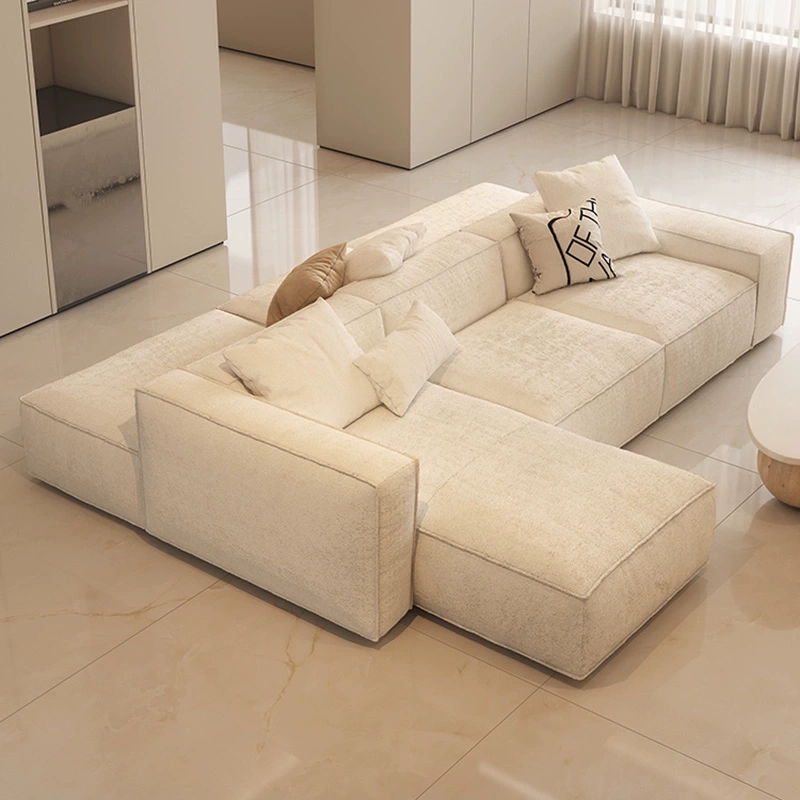
You’ve probably experienced it: a sofa that feels “cloud-soft” in the showroom, then slowly turns into a dip you can’t escape. Real comfort is a relationship between seat depth, support layers, and foam density—not just softness.
For most adults, a 60–70 cm seat depth (usable sitting depth) supports your thighs while letting your feet rest naturally—especially in small apartments where you sit upright to eat, work, and chat. Deeper seats can be relaxing, but often require extra cushions to avoid slouching, which adds visual clutter and steals space.
As a reference point used by many manufacturers, supportive seat cores often use foam around 30–40 kg/m³. Softer top layers may sit around 20–28 kg/m³ for that “cloud” touch—when paired with a firmer base. If everything is ultra-soft, it feels cozy for 5 minutes and tiring for 5 hours.
User feedback: “I used to think I wanted the softest sofa possible. But after working from home on it, I realized I needed support more than fluff. A balanced, ‘cloud-feel’ seat is comforting, not collapsing.”
When you’re designing for limited space, comfort must be efficient. A well-proportioned “cloud comfort” modular sofa gives you support without requiring extra pillows, extra throws, and extra furniture. That’s how you keep the room calm and visually open.
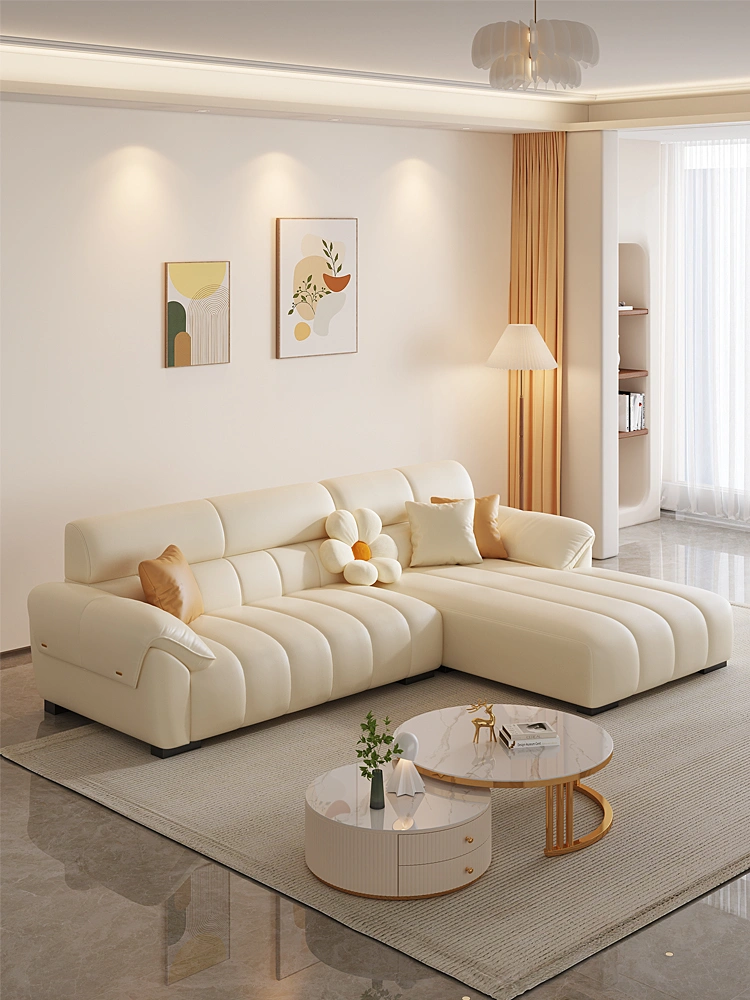
If you only add one “smart” piece to a small living room, make it a detachable ottoman. It’s the kind of design that feels like it was made for city life: limited storage, frequent layout changes, and the need to switch modes quickly.
Why it feels “bigger”: A modular system can keep the main sofa compact while the ottoman takes on the flexible roles. This is exactly the “one item, multiple uses” advantage that makes small apartments feel less crowded.
You don’t need a design degree to pick the right modular sofa. You just need a repeatable method that protects your space and your comfort.
Mark your main path (door to sofa, sofa to balcony, sofa to kitchen). Reserve 80–90 cm if possible. Only then place modules inside the remaining rectangle. If a layout forces a 60 cm passage, it will feel tight every day—no matter how pretty the sofa is.
Look for a usable seat depth around 60–70 cm for daily upright comfort. If it’s deeper, ask yourself: will you need extra back cushions to sit properly? If yes, that’s extra bulk in a small room.
Ask about the internal layers: a supportive core (often 30–40 kg/m³ foam density) plus a softer top layer for a cloud-like feel. Comfort should feel welcoming and stable. If you sink too quickly during a short sit, you’ll likely sink more after months of use.
Small-home truth: The best sofa is the one that doesn’t demand your room “serve it.” The room should serve your life—quiet mornings, last-minute guests, and that one corner you want to keep open so you can breathe.
If you want a setup that’s built for urban living—flexible modules, clean traffic flow, and a balanced “cloud comfort” sit—explore a modular sofa system designed to adapt as your home changes.
Explore our modular cloud-comfort sofa with detachable storage ottomanTip: send your room dimensions and doorway/window positions to get a recommended L/U configuration that protects your walkway.
 258
|
258
|
 Storage bed design techniques
Small bedroom storage
Hydraulic lift bed
Modern minimalist furniture
Eco - friendly home products
379
|
silent slides
storage bed procurement
drawer noise control
ball bearing rail technology
EN71 safety standards
201
|
hydraulic lift bed locking test
storage bed buying guide
hydraulic system stability
silent soft-close mechanism
eco-friendly furniture certification
466
|
ASTM F400-09 child furniture safety
EN71 vs ASTM compliance
modular sofa export standards
international furniture certification
child product safety testing
383
|
modular sofa compliance
EN71 standard
ASTM F400-09
furniture export certification
child safety in furniture
Storage bed design techniques
Small bedroom storage
Hydraulic lift bed
Modern minimalist furniture
Eco - friendly home products
379
|
silent slides
storage bed procurement
drawer noise control
ball bearing rail technology
EN71 safety standards
201
|
hydraulic lift bed locking test
storage bed buying guide
hydraulic system stability
silent soft-close mechanism
eco-friendly furniture certification
466
|
ASTM F400-09 child furniture safety
EN71 vs ASTM compliance
modular sofa export standards
international furniture certification
child product safety testing
383
|
modular sofa compliance
EN71 standard
ASTM F400-09
furniture export certification
child safety in furniture