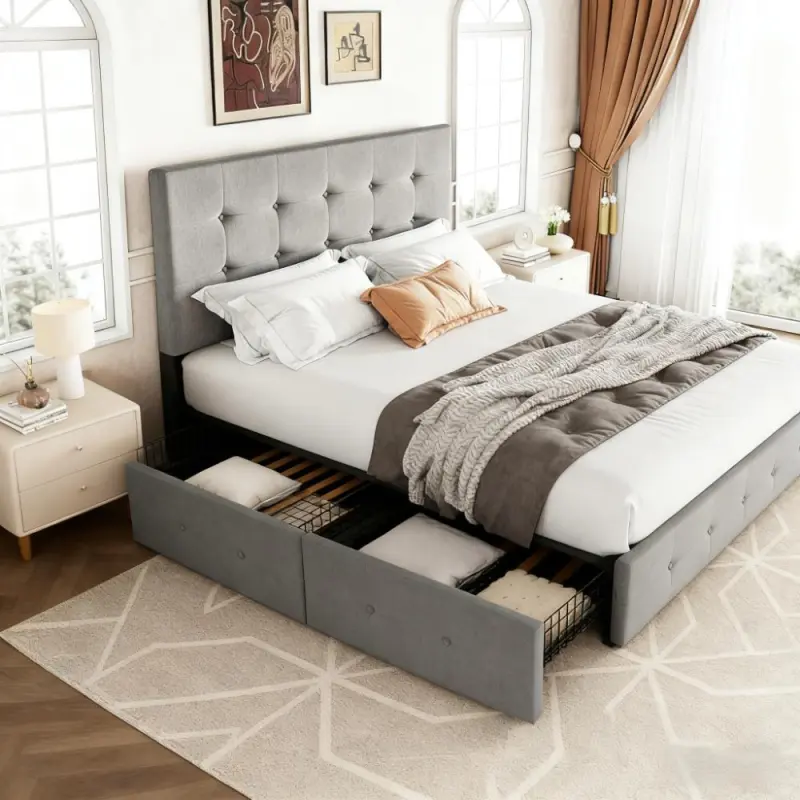
For B2B procurement professionals sourcing silent drawer slides for furniture such as storage beds, understanding the core technical attributes and quality benchmarks is paramount. This guide unpacks the five critical indicators that distinguish premium quiet glide hardware, combined with practical pitfalls to avoid. Leveraging international standards like EN71 and ASTM F400, we empower global buyers to make informed, risk-mitigated purchasing decisions that elevate product reliability and customer satisfaction.
At the heart of every high-performance silent slide is the ball bearing rail system. Unlike traditional friction-based rails, ball bearings reduce mechanical resistance and noise, enabling fluid drawer movements. The precision of the ball raceway — often made of hardened steel with corrosion-resistant coatings — directly influences longevity and quietness.
Reliable industrial data indicates that ball bearing slides with Abec 7 precision tolerance generate up to 40% less operational noise compared to generic counterparts, impacting end-user satisfaction notably.
Silent slides incorporate damping systems designed to gently decelerate drawers before closure, preventing abrupt slams and eliminating clacking sounds. The most effective models employ hydraulic or pneumatic dampers paired with soft-close latches, absorbing kinetic energy seamlessly.
Importantly, the damping performance is validated through endurance tests spanning 50,000+ cycles under standardized loads without degradation—a benchmark highlighted in the ASTM F400 specification.
Noise mitigation in slide rails extends beyond bearings and dampers to the rail profile itself. Optimized designs utilize special polymer linings or rubber buffers integrated along the track to minimize metal-on-metal contact. These internal buffers significantly cut down mid-frequency noise, dropping decibel levels by an average of 8-12 dB in comparative acoustic tests.
Excerpt from EN71-3 safety standard:
“Hardware components used in children's furniture shall demonstrate mechanical safety to limit pinch or crush hazards, and shall not emit hazardous noise levels beyond 60 dB during operation.”
Conformance to recognized industry standards protects buyers from purchasing substandard slides that compromise safety or durability. The European EN71 addresses mechanical and chemical safety for furniture fittings, while the ASTM F400 outlines performance criteria specific to drawer slides, including load ratings, cycle life, and noise testing.
Verifying supplier certifications and testing reports against these standards is essential for reliable sourcing. Suppliers demonstrating repeated compliance tend to guarantee consistent product quality.
For procurement managers or end users evaluating silent slides on arrival, the light push test offers an instant quality assessment tool. Gently push the drawer and listen for:
Encourage stakeholders to try this quick check on sample units to verify the silent performance firsthand — it’s a practical resistance filter against exaggerated supplier claims.
We utilize a proprietary silent slide system engineered with premium ball bearings, integrated hydraulic dampers, and multi-layer polymer buffering. Our products hold certifications from EN71 and ASTM F400, ensuring “every glide remains as quiet as the first.” This commitment to acoustic excellence raises furniture value perception internationally.
 201
|
201
|
 hydraulic lift bed locking test
storage bed buying guide
hydraulic system stability
silent soft-close mechanism
eco-friendly furniture certification
258
|
Storage bed design techniques
Small bedroom storage
Hydraulic lift bed
Modern minimalist furniture
Eco - friendly home products
99
|
Silent slide rail
Storage bed drawer noise
Ball bearings
Damping buffer system
Furniture purchase guide
184
|
modular sofa layout
small living room design
U shape sofa combination
L shape sofa optimization
cloud comfort sofa
324
|
Sofa fabric abrasion test
Martindale method
Velvet sofa durability
E1 formaldehyde emission
Furniture environmental standards
hydraulic lift bed locking test
storage bed buying guide
hydraulic system stability
silent soft-close mechanism
eco-friendly furniture certification
258
|
Storage bed design techniques
Small bedroom storage
Hydraulic lift bed
Modern minimalist furniture
Eco - friendly home products
99
|
Silent slide rail
Storage bed drawer noise
Ball bearings
Damping buffer system
Furniture purchase guide
184
|
modular sofa layout
small living room design
U shape sofa combination
L shape sofa optimization
cloud comfort sofa
324
|
Sofa fabric abrasion test
Martindale method
Velvet sofa durability
E1 formaldehyde emission
Furniture environmental standards