Small Apartment L-Shaped Sofa Size & Layout Guide: Dimensions, Corner Fit, and Comfort
2026-02-18
Tutorial Guide
Want an L-shaped sofa that feels spacious—not cramped—in a small living room? This practical guide helps you choose the right dimensions and layout using clear, measurable benchmarks (e.g., seat depth 52–56 cm, armrest height around 65 cm) so you can plan circulation paths, avoid visual bulk, and turn unused corners into flexible seating. You’ll also learn how construction details affect daily maintenance and long-term durability, from removable cushions and high-density foam to a solid pine frame, plus performance indicators like 30,000-cycle abrasion testing and indoor air targets such as formaldehyde <0.05 mg/m³ and E1-grade standards. Designed for both local homeowners and international buyers, it includes step-by-step measuring advice, common purchase mistakes to avoid, and suggested infographic ideas (dimension diagrams and space-efficiency comparison tables). What’s your living room width? Share it in the comments and we’ll help you sanity-check your layout.
Small Apartment, Big Comfort: The Practical L-Shaped Sofa Size & Layout Guide
If your living room feels like it has to do everything—hosting, lounging, working, storage—then an L-shaped sofa can be a smart move. But in a small apartment, “smart” depends on sizing and layout, not just style. This guide walks you through measurements (like seat depth 52–56 cm and a comfortable armrest height around 65 cm), spacing rules that prevent the “crowded box” feeling, and durability details buyers often miss.
Quick check-in: What’s your living room width (wall to wall)? Drop it in the comments—layout advice gets 10x easier when you have one solid number.
1) The Real Small-Space Problem: Not “Too Little Room,” but Too Many Functions
In compact homes, the living room typically needs to support 3–5 daily functions: watching TV, chatting, occasional guest sleeping, kids’ play, even a laptop corner. The pain point isn’t only the square meters—it’s the conflict between walkway clearance and seating capacity.
Many people solve it by downsizing furniture too aggressively, then end up with a sofa that looks “light” but feels uncomfortable after 20 minutes. The goal is different: choose an L-shaped sofa that gives you more usable seats per footprint, without turning your living room into a narrow corridor.
2) Why an L-Shaped Sofa Works So Well in Small Apartments
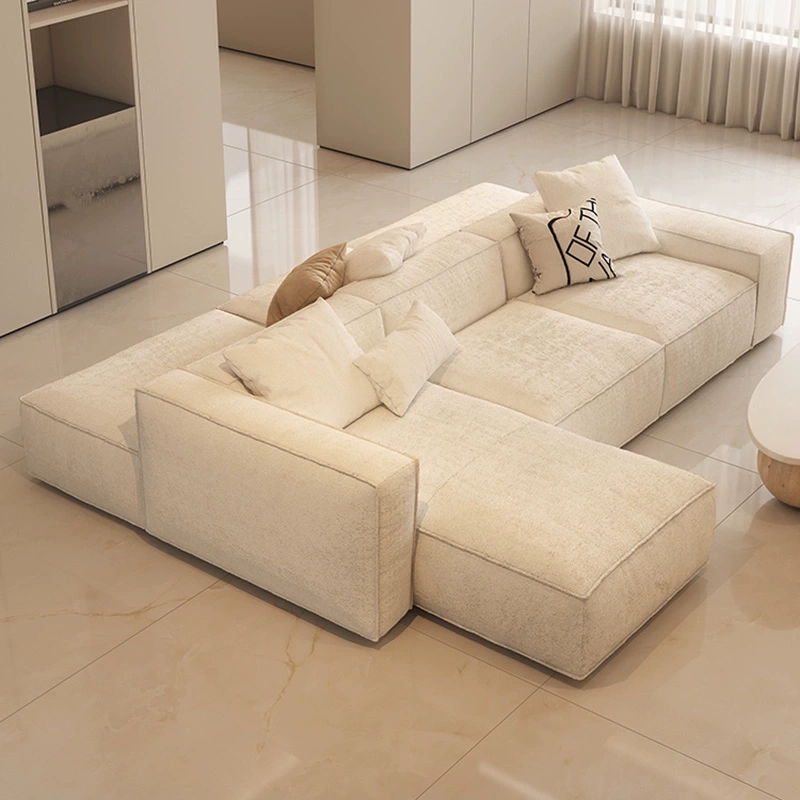
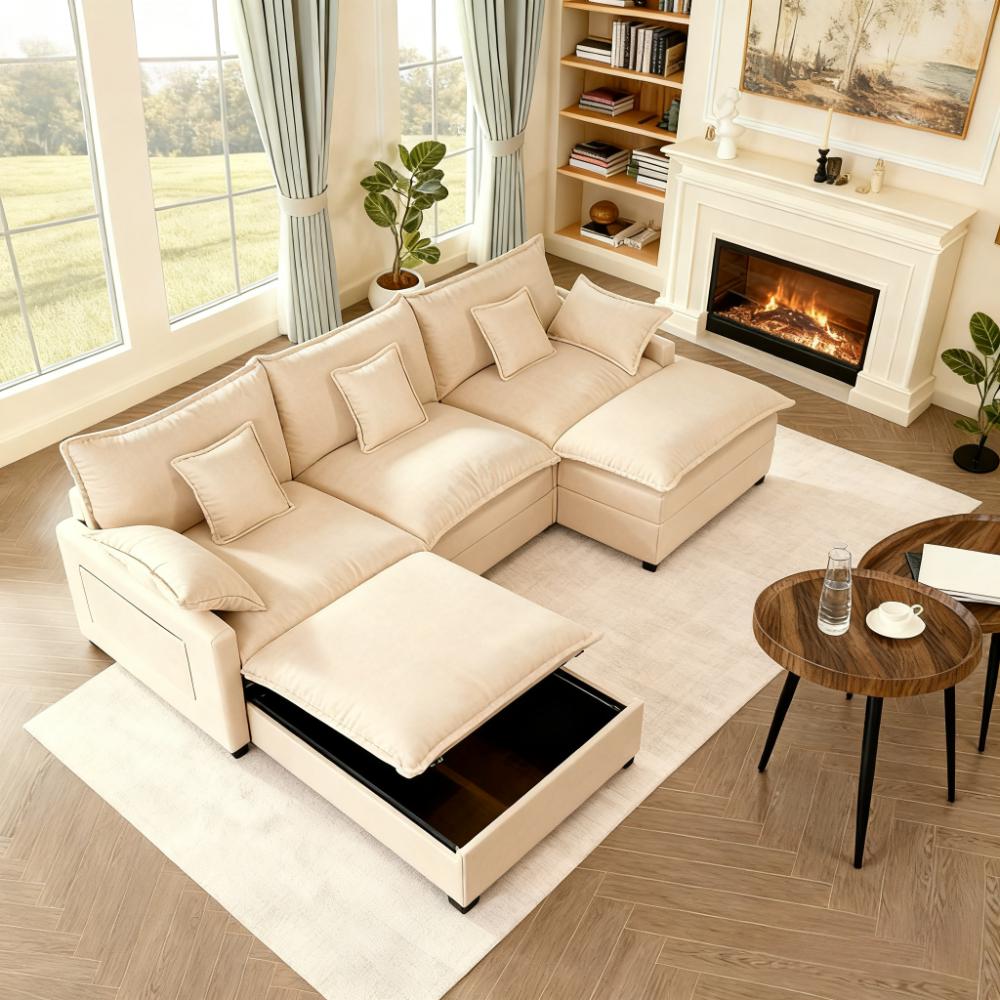
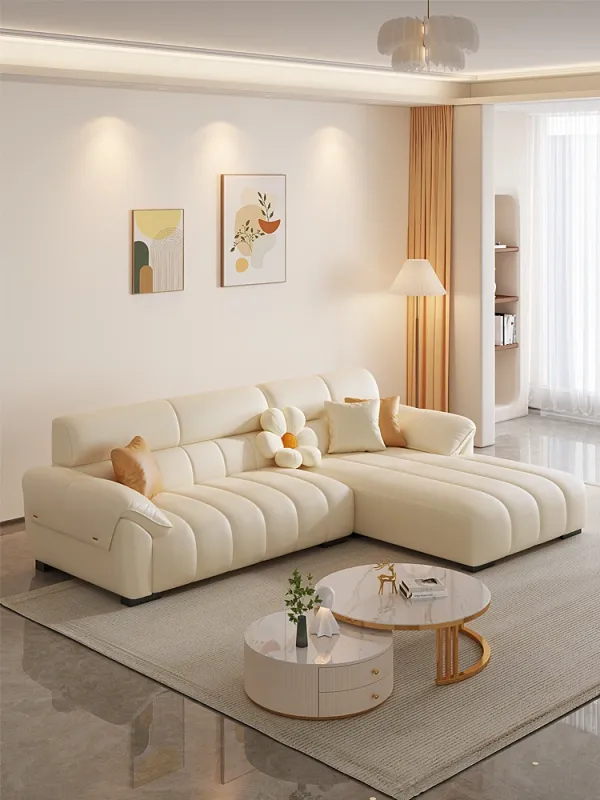
An L-shaped sofa (also called a sectional) wins in small rooms because it turns a “dead” corner into high-value seating. Instead of two separate sofas competing for the same floor area, an L-shape uses a single footprint to create a natural social zone.
Corner efficiency (the hidden seat multiplier)
A corner section often replaces what would otherwise be empty air or an awkward end table. In practical terms, you may gain 1–2 extra comfortable seats without expanding your layout width.
Flexible combinations for real-life rooms
Look for L-shaped sofas that allow left/right chaise configuration. For rentals and international projects, that flexibility matters—rooms aren’t always symmetrical, and door swing directions can change everything.
Buyer mindset note: You’re not just buying “a sofa.” You’re buying a traffic plan. The right L-shape makes the room feel wider because people move naturally around it.
3) The Key Dimensions That Decide Comfort (and Whether the Room Feels Tight)
Before you fall in love with fabric or color, lock down the measurements. These ranges are widely used in modern upholstery design and tend to fit most adults comfortably.
Recommended “small apartment friendly” dimensions (reference ranges)
| Dimension |
Best Range for Small Spaces |
Why It Matters |
| Seat depth (usable) |
52–56 cm |
Deep enough to relax, not so deep that shorter users “float” without a pillow. |
| Seat height |
42–46 cm |
Supports easier sitting/standing; feels less bulky visually. |
| Armrest height |
60–68 cm (often ~65 cm) |
Comfort for leaning; too high can block sightlines in small rooms. |
| Chaise depth (front to back) |
145–165 cm |
Controls how far the “L” projects into your walkway zone. |
| Overall length (main side) |
220–280 cm |
A sweet spot for 3–4 seats without dominating the wall. |
| Minimum walkway clearance |
75–90 cm |
Keeps the room feeling open; 60 cm works only for low-traffic areas. |
Notes: Ranges vary by market and style. If you’re sourcing for hospitality or large-scale projects, align with local ergonomic standards and target user profile.
How to measure your room (without making expensive mistakes)
- Mark the usable rectangle: measure wall-to-wall, then subtract radiators, door swing, and any built-ins.
- Tape layout: use masking tape on the floor to outline the sofa’s full footprint (include the chaise depth).
- Walk it: if two people can pass without turning sideways, you’re close to the right clearance.
- Check “visual height”: tall arms and high backs can make small rooms feel compressed even if the footprint fits.
Infographic idea you can add to this page
A simple “Tape-on-the-floor size diagram” showing seat depth (52–56 cm), chaise depth (145–165 cm), and recommended walkway (75–90 cm). One visual reduces measurement errors dramatically—especially for first-time buyers.
4) Materials & Design Details That Reduce Maintenance (and Extend Lifespan)
In a small space, your sofa gets used more frequently—so the “inside” specs matter as much as the look. If you’re comparing suppliers, ask for test reports and material declarations, not only photos.
Fabric performance: abrasion, pilling, and daily cleaning
For family use or rental properties, a good reference is 30,000+ Martindale cycles for abrasion resistance. Velvet can be a strong choice when it’s engineered for durability; modern performance velvet often combines a soft hand feel with improved wear resistance. Also look for colorfastness ≥ Grade 4 (rubbing) to reduce visible fading in high-touch areas.
Cushions: removable covers + high-density foam
If you want a sofa that stays “neat” without constant professional cleaning, prioritize removable seat cushions and a structured fill. Many buyers like high-density foam around 30–35 kg/m³ for balanced support and shape retention. Removable cushions are also practical for spot-cleaning—especially in compact homes where the sofa is the main seating and dining overflow.
Frame: kiln-dried solid wood for stability
A stable frame is the difference between “quiet comfort” and a sofa that starts creaking in one year. Solid wood options like pine are widely used when properly dried and reinforced at stress points. If you’re sourcing for export, request internal structure photos and corner-block reinforcement details.
Indoor air & compliance references (commonly requested)
- E1-grade panel/wood composite standard (often required in many markets).
- A practical reference target for indoor air: formaldehyde < 0.05 mg/m³ (ask for lab testing method and date).
- For commercial projects, confirm local fire retardancy requirements before selecting fabric.
5) International Buyer Pitfalls (and How You Avoid Them Step by Step)
If you’re purchasing cross-border—whether for distribution, interior projects, or your own home—mistakes usually happen in the “last mile”: packaging size, building access, and assembly reality.
Pitfall A: Only checking the sofa size, not the delivery path
Measure door width, elevator depth, and stair turns. Many sectionals arrive in modules, but chaise pieces can still be bulky. A safe practice is to ensure the largest carton can pass with at least 3–5 cm clearance at narrow points.
Pitfall B: Confusing “left chaise” vs “right chaise” definitions
Always define it from the viewer’s perspective: standing facing the sofa. Ask the supplier to confirm with a simple diagram in the PI/contract so it’s locked in writing.
Pitfall C: Underestimating maintenance in small homes
In tight spaces, dust and spills show up faster. If you want low maintenance, choose: removable cushions, easy-clean upholstery, and darker mid-tone colors that hide minor marks without making the room feel heavy.
6) Layout Scenarios: Choose the One That Matches Your Room Shape
Scenario 1: Narrow living room (the “corridor” type)
Place the longer side against the longest wall and keep the chaise on the far end (away from the main entry). Your priority is preserving a single clean walkway of 75–90 cm. In narrow rooms, slim armrests and a lighter visual profile can make the space feel noticeably calmer.
Scenario 2: Square-ish room (easy to overfill)
The temptation is to buy the biggest sectional that fits wall-to-wall. Instead, keep at least 20–30 cm of breathing space from one side wall (or add a slim side table). This prevents the room from feeling like the sofa is “pressing outward” and gives you a practical place for lighting or charging.
Scenario 3: Open-plan living + dining (multi-zone control)
Use the back of the L-shaped sofa as a soft divider between zones. Keep the chaise oriented away from dining traffic so chairs don’t “fight” the chaise corner. In open-plan layouts, a sectional helps you define the living area without adding bulky partitions.
Space-utilization comparison table (simple, useful for buyers)
| Option |
Typical Seats |
Footprint Efficiency |
Best For |
| 2-seat + 1-seat |
3 |
Medium (wasted corner space) |
Frequent rearranging, separate seating angles |
| L-shaped sofa |
3–5 |
High (corner becomes usable seats) |
Small apartments, open-plan zoning, hosting |
| Straight 3-seat |
3 |
Medium-high (simple footprint) |
Very narrow rooms needing clean edges |
If you’re deciding between “compact comfort” and “maximum seats,” anchor your choice to one number: walkway clearance. When that stays above 75 cm, the room typically feels livable even with generous seating.
A Practical Buyer Checklist (Copy/Paste Before You Order)
- Your room width/length (usable): ________ cm × ________ cm
- Target walkway clearance: 75–90 cm
- Preferred seat depth: 52–56 cm
- Chaise projection you can accept: ________ cm (reference: 145–165 cm)
- Largest delivery carton must fit: door/elevator/stairs checked
- Fabric durability: ≥ 30,000 Martindale (request report)
- Low maintenance: removable seat cushions + structured foam (30–35 kg/m³ reference)
- Compliance: request E1 and formaldehyde test references (target < 0.05 mg/m³)
Tell us two numbers and get a faster recommendation: your living room width and the maximum chaise depth you can accept. You’ll avoid 90% of “it fits on paper but feels wrong” purchases.
Ready for a Low-Maintenance L-Shaped Sofa That’s Built for Daily Use?
If you want a sectional that’s easier to live with in a compact home—think removable cushions, supportive high-density foam, and a stable solid wood frame—check the option below and share your room size for a better-fit suggestion.
Explore the Velvet L-Shaped Sofa with Removable Cushions
Tip: Add your doorway width and elevator size when you message—delivery planning becomes straightforward.
Your turn: Are you dealing with a narrow “corridor” living room, or a square room that gets overfilled easily? Comment with your layout type and the wall length you want the sofa to sit on.